Privacy can make or break your experience in a Bel Air home. You want quiet arrivals, outdoor spaces that feel truly yours, and confidence that future changes next door will not upend your sanctuary. The good news is you can evaluate a property’s privacy with a clear process before you buy. In this guide, you’ll learn how to read approach lines, siting, landscaping, setbacks, and access design so you can choose a home that fits your standards. Let’s dive in.
Why privacy matters in Bel Air
Bel Air’s hills, ridges, and canyons create natural screening that can shield a home from view. Large, irregular lots and mature landscaping can further reduce sightlines from streets and neighbors. Many properties also sit far back from the road with long, winding driveways.
These same features can add complexity. Hillside regulations, setbacks, and easements affect where you can build or plant. The result is a neighborhood where privacy is achievable but never accidental. You need to verify it on the ground and in the records.
Assess approach and arrival
How you and your guests approach the property sets the tone for seclusion.
- Driveway length and type. Long, winding drives typically improve concealment. Short or straight drives make homes easier to see.
- Street character. Narrow, low‑traffic streets often feel quieter than busy corridors and help limit views into the property.
- Setback depth. More distance from the street reduces sightlines from cars and passersby.
- Topography along the route. An uphill approach can hide the structure behind a rise. A downhill approach may expose roofs and upper levels.
- Vantage points. Intersections, curves, and neighboring yards can reveal more of the home than you expect.
Practical checks:
- Arrive from multiple directions during the day and evening to see what is visible at different sun angles.
- Stand at the curb and property line to gauge how much of the home can be seen.
- Note whether the driveway is visible from sidewalks or adjacent properties.
Evaluate siting and orientation
Where the house sits on the lot and how it faces the surroundings drive daily privacy.
- Elevation relative to neighbors. Higher pads often deliver views but can be visible to more homes. Lower pads can feel tucked in but may trade off views.
- Orientation of primary rooms. Bedrooms and living areas facing a public street or neighbor’s yard may reduce privacy.
- Use of setbacks and depth. Deep lots can support internal courtyards and private outdoor rooms that feel screened from all sides.
- Massing and profile. Stepped levels, lower rooflines, and terraces can reduce how much of the home is visible from the street.
Practical checks:
- Review topographic or ALTA survey data to understand relative elevations and building envelopes.
- Walk the perimeter and mark potential sightlines from neighboring windows and nearby streets.
- If you plan to rebuild, study how a new structure could be oriented to internalize privacy.
Use landscaping for year‑round screening
Thoughtful planting is the most flexible, non‑structural way to create privacy in Bel Air.
- Mature vs. new plantings. Mature trees and hedges provide immediate screening. Newly planted landscapes can take years to fill in.
- Layered strategy. Combine tall evergreen trees, mid‑story evergreens, and dense shrubs to create depth and reduce gaps.
- Species selection and water. Choose evergreen, dense‑foliage species suited to Los Angeles conditions and consider drought tolerance. Irrigation capacity and water restrictions matter.
- Maintenance and longevity. Plan for ongoing trimming, pest management, and irrigation to keep screens effective.
- Tree protection rules. The City of Los Angeles regulates the removal of certain protected trees, and permits may be required.
- Seasonal effects. Deciduous species can create privacy gaps in winter. Confirm whether year‑round coverage is needed.
Practical checks:
- Identify which trees sit on your parcel versus a neighbor’s and who maintains them.
- Ask for any arborist reports and the property’s landscape maintenance history.
- Confirm water infrastructure for irrigation, including meter size and any known constraints.
Know the rules: setbacks and easements
Legal constraints define what you can build or plant and what neighbors might do.
- Zoning setbacks and height limits. Municipal code determines minimum distances from property lines and influences where usable outdoor areas can be created.
- Recorded easements. Utility, access, and drainage easements can cross your yard and limit planting or structures. They must remain clear.
- Open‑space or conservation easements. Adjacent canyon lands may be protected, which can limit development. Some recorded instruments may allow certain types of public access.
- CC&Rs and neighborhood covenants. In gated enclaves or HOA areas, private rules may regulate fencing, gate design, landscaping heights, and driveway treatments.
- Neighbor development potential. Parcel sizes, zoning, and recent permits on adjacent lots can signal future construction that affects privacy.
Important principle: In California, there is generally no automatic legal right to maintain a view or privacy from neighbor‑built structures unless a recorded easement or covenant exists. If these rights matter to you, confirm recorded protections.
Practical checks:
- Order a preliminary title report and an ALTA or owner’s survey to identify easements and encumbrances.
- Review zoning and parcel data through Los Angeles Department of City Planning tools.
- Obtain HOA documents and neighborhood rules if the property is governed by an association.
Design for discreet access
Entry points and circulation patterns influence how visible daily life feels.
- Separate guest and service access. A service lane to the side or rear keeps deliveries out of view. Locate visitor drop‑off away from main rooms.
- Garage placement. Detached or below‑grade garages can reduce visibility of vehicles and activity.
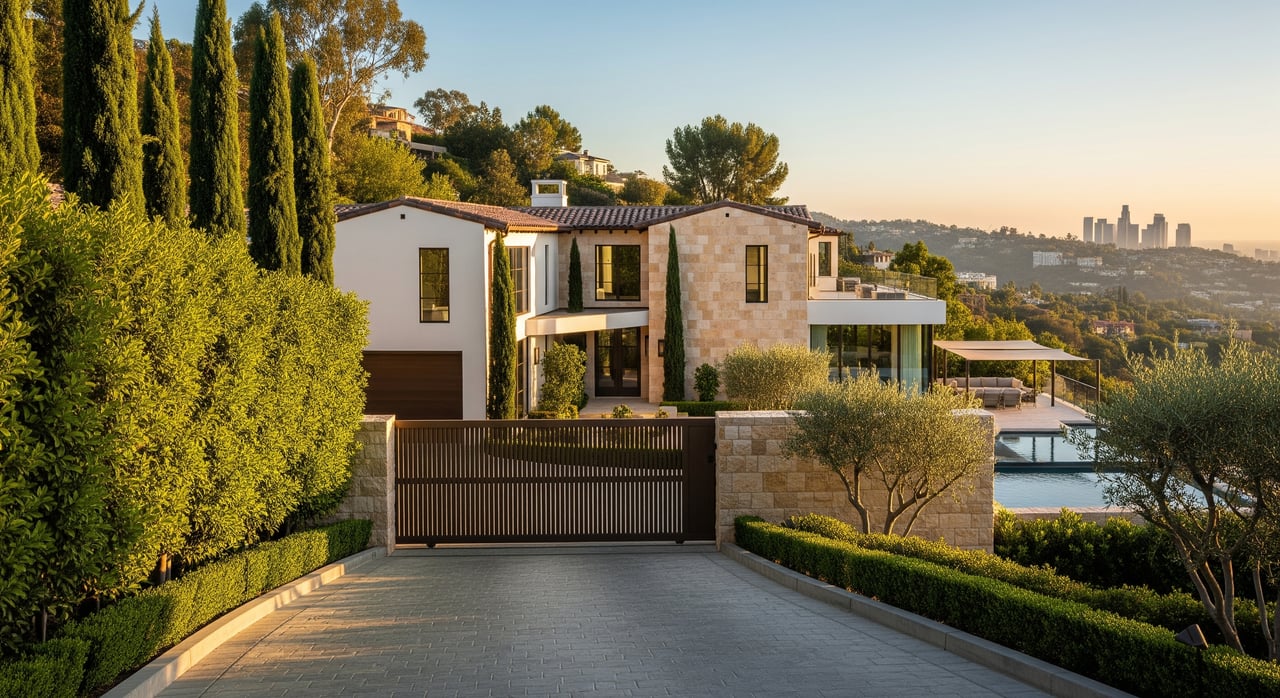
- Gate and screening design. Where allowed, gates, fences, and planted screens at the drive entrance can limit direct views.
- Parking areas. Guest parking that sits behind landscaping or walls minimizes exposure to the main residence.
Practical checks:
- Observe how delivery vehicles and guests would navigate the site.
- Confirm whether the parcel has legal frontage or rights for secondary access.
- Verify municipal and covenant rules for driveway gates, curb cuts, and widths.
Future‑proof your privacy
Today’s privacy can change with new construction next door or public projects nearby.
- Zoning and lot splits. Study whether adjacent parcels could be subdivided or built up under current rules.
- Permit activity. Review recent grading, remodel, or new build permits on neighboring lots to see what may be coming.
- Neighborhood trends. In areas with frequent teardowns, newer builds may add large glazing or rooftop decks that alter sightlines.
- Public works. Road widening or utility upgrades can affect setbacks or add visible infrastructure.
Practical checks:
- Ask for recent permit records on nearby parcels from city sources.
- Review assessor data for ownership patterns that could indicate redevelopment.
- Consider contract strategies related to planting or buffers, understanding that long‑term control over neighbors is limited without recorded rights.
Your due diligence checklist
Gather these items before you write an offer or early in escrow.
Documents to obtain:
- Preliminary title report that shows easements and covenants.
- ALTA or owner’s survey with topographic data for boundaries, contours, and structures.
- Zoning and parcel profile from Los Angeles Department of City Planning.
- Permit history for the subject property and immediate neighbors.
- HOA or neighborhood governing documents if applicable.
- Arborist report for specimen trees including health and protected status.
- Any landscape plans or planting inventories, if available.
On‑site inspections:
- Drive the approach at different times of day and from multiple directions.
- Walk the property lines and identify key vantage points on adjacent parcels where allowed.
- Map and photograph sightlines from streets and public rights‑of‑way.
- Confirm irrigation infrastructure and water availability for screening.
Questions for the seller or agent:
- Are any easements recorded across the property, and have they been used recently?
- Have any tree removal permits been issued, or are protected trees present?
- What permits have nearby owners filed for additions or new construction?
- Are there CC&Rs or rules that limit exterior work, fencing, or planting heights?
- Is there a landscape maintenance history and any known pest or disease issues?
Advisors to engage:
- Title company for a thorough search of recorded instruments.
- Licensed land surveyor for accurate boundaries, contours, and easements.
- Local land‑use attorney or planning consultant to interpret zoning and entitlement risk.
- Landscape architect with privacy screening experience in Los Angeles.
- Certified arborist to evaluate specimen trees and removal permitting.
- Civil or structural engineer if you plan siting changes on steep grades.
Balancing privacy, light, and value
In Bel Air, strong privacy often carries a market premium. Secluded siting, mature screening, and discreet access attract buyers who value quiet and anonymity. Well‑executed privacy can also support long‑term value in the high‑end segment.
There are tradeoffs to weigh. Dense planting and tall walls can limit natural light, views, and airflow. Maintenance costs for hedges, trees, and irrigation should be part of your total ownership plan. Aim for layered strategies that protect privacy while preserving the daylight and views that make Bel Air living special.
Work with a local advocate
Privacy is not guaranteed by a gate, a hedge, or a long driveway alone. It is the sum of your approach, siting, plant maturity, legal rights, and neighbor context. With the right due diligence, you can secure a home that feels genuinely private on move‑in day and resilient over time.
If privacy is a top priority in your Bel Air search, connect with a local expert who can guide you through property‑level evaluations, surveys, title, and planting strategies. For discreet, white‑glove representation, reach out to Michael LaMontagna. Request a confidential consultation.
FAQs
What should I look for on the approach to a Bel Air home?
- Focus on driveway length and curvature, street traffic, setback depth, topography along the route, and what can be seen from intersections and neighboring lots.
How do setbacks and easements affect privacy options?
- They define where you can place structures and plantings, and may require clear access that limits screening, so verify them in a title report and survey.
Can I rely on a view or privacy right in California?
- Generally no, unless a recorded easement or covenant grants that right, so confirm protections in the property’s recorded documents.
What landscaping provides year‑round screening in Los Angeles?
- Layered, evergreen planting with mature trees, mid‑story evergreens, and dense shrubs offers the most consistent privacy when maintained and irrigated.
How can I assess future privacy risks from neighbors?
- Check zoning and lot‑split potential, review recent permits on adjacent parcels, study neighborhood rebuild trends, and watch for public works plans.